Source rechargeable lithium turbo jet fan for Hotels, Cars, Garages
Compare 30 listings of rechargeable lithium turbo jet fan units featuring brushless motors and battery power. Buyers can evaluate specifications like wind speed, voltage, and weight to find suitable options for hotels, cars, and garages.
Key considerations
Products List




Comprehensive Sourcing Guide
Strategic Sourcing Guide for Rechargeable Lithium Turbo Jet Fans
Understanding Product Definitions and Technical Classifications
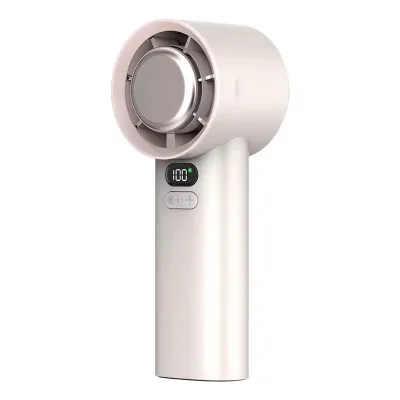
The core keyword "rechargeable lithium turbo jet fan" represents a specific intersection of portable power, high-velocity airflow, and industrial-grade motor technology. In the current B2B market, this terminology often encompasses a spectrum of devices ranging from handheld mini air coolers to heavy-duty industrial ventilation units. Buyers must first distinguish between consumer-grade handheld units and professional-grade turbo fans, as the engineering requirements differ significantly. Based on observed market data, the term "turbo" in this context frequently correlates with brushless motor technology, which offers higher efficiency and longevity compared to brushed alternatives.
The supply chain for these devices is heavily concentrated in manufacturing hubs such as Guangdong, China, where the integration of lithium battery technology and motor assembly is most advanced. A critical observation in the current inventory is the variation in motor types; while some listings specify "Brushless Motor" or "DC Brushless Motor," others list "Brushed Motor." For a "turbo" classification, the brushless variant is generally preferred due to its ability to sustain higher rotational speeds without the friction and heat generation associated with carbon brushes. The power source is consistently identified as battery-operated, with specific lithium-ion capacities observed ranging from 4000 mAh to 6000 mAh. This variance directly impacts the runtime and the weight of the unit, which is a key factor in applications requiring portability, such as outdoor or garage use.
Critical Technical Specifications and Performance Metrics
When evaluating a rechargeable lithium turbo jet fan, buyers must scrutinize the technical specifications to ensure the device meets the intended operational demands. The voltage requirements are a primary differentiator, with observed values ranging from 12.25V to 16V. This voltage range dictates the compatibility with existing charging infrastructure and the power output capabilities of the fan. Higher voltage systems typically correlate with more powerful motors capable of generating the high air velocities associated with "turbo" performance.
Airflow and pressure metrics are equally vital. The observed data indicates an air flow range of 2.0 to 83.6 cubic meters per second, with outlet speeds varying between 14.7 and 38 meters per second. These figures suggest a wide disparity in product capability, where some units function as personal cooling devices while others serve as industrial ventilation tools. The pressure classification is noted as "Medium Pressure," which is suitable for moving air through ducts or clearing smoke in confined spaces. Furthermore, the running mode is observed to be both uni-directional and reversible, a feature essential for applications requiring air extraction or intake switching, such as in garages or commercial households.
The physical dimensions and weight are also critical constraints. Observed dimensions include a footprint of approximately 19.5 x 11 x 6.5 cm, with single gross weights ranging from 1.500 Kg to 2.500 Kg. The weight of the unit without the battery is recorded at 0.321 Kg, highlighting the significant contribution of the battery pack to the total mass. For handheld applications, the weight distribution and the inclusion of a handle or pedestal installation option are crucial for user comfort and stability. The material composition varies, with listings citing Plastic, Stainless Steel, and Iron, each offering different trade-offs between corrosion resistance, durability, and cost.
Compliance, Certification, and Safety Standards
Navigating the regulatory landscape is a non-negotiable aspect of sourcing rechargeable lithium turbo jet fans. The presence of lithium batteries introduces specific safety risks, including thermal runaway and short-circuiting, which necessitates rigorous certification. In the observed market, certifications such as ISO and CE are explicitly listed for certain models. The CE marking indicates compliance with European health, safety, and environmental protection standards, which is often a prerequisite for selling in the European Union. However, buyers must verify that these certifications are current and applicable to the specific model and voltage configuration being purchased.
Energy efficiency is another area where compliance plays a role. Some products are rated with an Energy Efficiency Rating of Class A, suggesting optimized power consumption relative to airflow output. This is particularly relevant for high-volume procurement where operational costs accumulate over time. The operating language is typically English, but buyers should confirm that all safety warnings, voltage labels, and user manuals are available in the target market's language to ensure legal compliance and user safety.
Warranty terms also serve as a proxy for manufacturer confidence in product safety and quality. A standard warranty period of 1 year is observed, often accompanied by after-sales services such as return and replacement policies. Some suppliers offer overseas call centers, which can be a significant advantage for international buyers needing technical support. However, the presence of "None" for after-sales service in some listings serves as a warning sign, indicating that buyers must be prepared to handle potential returns or repairs independently if the supplier does not provide robust support.
Cost Drivers and Pricing Dynamics
The pricing of rechargeable lithium turbo jet fans is influenced by a complex matrix of factors, including motor technology, battery capacity, material quality, and certification status. The observed price range in the market is exceptionally broad, spanning from 0.91 USD to 1,000,000 USD. This vast disparity underscores the importance of defining the specific application requirements before engaging with suppliers. The lower end of the spectrum likely corresponds to basic handheld units with smaller batteries and brushed motors, while the higher end may reflect industrial-grade systems with advanced brushless motors, larger battery packs, and comprehensive safety certifications.
Material costs are a significant driver. Units constructed with Stainless Steel or Iron generally command a higher price than those made primarily of Plastic, due to the raw material costs and the additional processing required for metal fabrication. Similarly, the battery capacity is a direct cost factor; a 6000 mAh battery will inherently cost more than a 4000 mAh unit, and the quality of the lithium cells used (e.g., Grade A vs. Grade B) will further influence the final price.
Minimum Order Quantity (MOQ) is another critical cost consideration. The observed MOQ range spans from 1 to 1000 units. Buyers seeking to test the market or fulfill small-scale needs can often find suppliers with an MOQ of 1, but this typically comes with a higher per-unit cost. Conversely, bulk procurement with an MOQ of 1000 units usually unlocks significant volume discounts, making the per-unit cost more competitive. Customization options, such as adding a 3D printed logo or pattern, also add to the cost but can be essential for branding and market differentiation.
Typical Applications and Use Case Analysis
The versatility of rechargeable lithium turbo jet fans allows them to serve a diverse array of applications, from personal comfort to industrial safety. The observed application categories include Hotel, Car, Outdoor, Garage, and Commercial Household settings. In a hotel or commercial household context, these fans are often used for rapid air circulation or as emergency ventilation tools. The "Hand Held" feature and "Rechargeable" nature make them ideal for mobile use in these environments.
For automotive and garage applications, the high air velocity and "Medium Pressure" capabilities are utilized to clear smoke, dust, or fumes from confined spaces. The ability to operate without a power cord is a distinct advantage in garages where electrical outlets may be scarce or hazardous. The "Outdoor" application category suggests use in construction sites or emergency response scenarios where portable, high-performance ventilation is required.
The installation method, whether "Pedestal" or handheld, further dictates the use case. Pedestal installations provide stability for stationary ventilation needs, while handheld units offer flexibility for targeted airflow. The "Axial Flow" direction is particularly effective for moving large volumes of air over short distances, making it suitable for cooling electronics or ventilating rooms. Buyers should match the specific airflow and pressure requirements of their intended application with the technical specifications of the fan to ensure optimal performance.
Supplier Evaluation and Quality Control Protocols
Selecting the right supplier requires a rigorous evaluation process that goes beyond price and basic specifications. Buyers should prioritize suppliers who provide clear documentation regarding their manufacturing processes, material sourcing, and quality control measures. The presence of certifications like ISO and CE is a positive indicator, but buyers must verify the authenticity of these documents and ensure they cover the specific product model.
Quality control should be a central part of the procurement strategy. Given the variation in observed specifications, such as motor types and battery capacities, buyers should request pre-shipment samples to verify that the delivered products match the agreed-upon specifications. Testing for key performance indicators, such as voltage stability, airflow velocity, and noise levels (observed range 51-78dB(a)), is essential. The noise level is particularly important for applications in hotels or commercial households where user comfort is paramount.
Supplier reliability is also a critical factor. The availability of after-sales services, including return and replacement policies and overseas call centers, can significantly reduce the risk associated with international procurement. Buyers should inquire about the supplier's lead times and their ability to handle custom orders, such as logo printing or specific packaging requirements. The "Gift Box + Outer Box" packaging observed in some listings indicates a focus on retail presentation, which may be relevant for buyers targeting consumer markets.
Long-Term Procurement and Lifecycle Management
Sourcing rechargeable lithium turbo jet fans is not merely a transactional activity but a long-term partnership that requires careful lifecycle management. The rechargeable nature of these devices means that battery degradation over time is a primary concern. Buyers should investigate the cycle life of the lithium batteries used in the products and the availability of replacement batteries. A 1-year warranty is standard, but for high-volume or critical applications, buyers may need to negotiate extended warranty terms or service level agreements.
Customization is a key trend in this market, with options for 3D printing logos and patterns available. This allows buyers to brand the products for specific corporate or promotional purposes. However, customization adds complexity to the supply chain, requiring clear communication of design specifications and approval processes. The "Logo Free" option provides a baseline for buyers who prefer a generic product, while "Customized Logo Available" offers a path to brand differentiation.
Finally, buyers must consider the environmental impact and disposal regulations associated with lithium batteries. As regulations tighten globally, suppliers who can provide guidance on battery recycling and compliance with environmental standards will be more valuable partners. The "Return and Replacement" service is a critical component of this, ensuring that defective units are handled responsibly and that the supply chain remains efficient. By focusing on these long-term considerations, buyers can build a resilient procurement strategy that delivers value and reliability over the product's entire lifecycle.
FAQs
What motor types are available for rechargeable lithium turbo jet fans?
Both brushless and brushed motors are available in the current inventory. Brushless variants, including DC Brushless models, offer higher efficiency and longevity, while brushed options provide a lower-cost alternative for basic applications.
Can I customize the logo on these fans?
Yes, customized logo options are available for most models. Suppliers offer 3D printing for patterns and allow for specific logo placement, enabling buyers to brand the units for retail or corporate use.
What is the battery capacity range for these units?
Observed battery capacities range from 4000 mAh to 6000 mAh. These lithium-ion capacities directly impact the runtime and overall weight, with higher capacity units generally providing longer operation times for portable applications.
Which certifications do these fans typically hold?
Some models carry ISO and CE certifications for safety and compliance. Buyers should verify that these certifications apply to the specific model and voltage configuration, as not all listings explicitly state compliance status.
How does the installation method affect usage?
Installation options include pedestal mounting or handheld use. Pedestal setups provide stability for stationary ventilation, while handheld designs offer flexibility for targeted airflow in garages, cars, or outdoor environments.
What is the warranty period for these products?
A standard warranty period of one year is commonly observed. This often includes return and replacement policies, though some suppliers may offer no after-sales service, so verification is essential before purchase.